 Xognosis EsotericaArcane Publishing Studio
In the spring of 1587, in a castle town in Bohemia, two Englishmen and their wives signed a document they believed God himself had demanded. The men were Dr. John Dee, the mathematician and astrologer, and Edward Kelley, the scryer who claimed to see angels in a black obsidian stone.

Share
In the spring of 1587, in a castle town in Bohemia, two Englishmen and their wives signed a document they believed God himself had demanded. The men were Dr. John Dee, the mathematician and astrologer, and Edward Kelley, the scryer who claimed to see angels in a black obsidian stone. The covenant bound the four of them into what the record calls indissoluble and inviolable unity, charity and friendship. What the angels had commanded, and what the covenant enforced, was that each man would share the other's wife. Seventy-two years later, when Meric Casaubon prepared the diaries for the press, he faced a printer's dilemma: the world deserved to see this extraordinary archive, and the world was not ready to read all of it plainly. His solution was the scholarly equivalent of a lowered voice. He left the most combustible passages, the covenant language among them, in Latin.
The third of the seven "actions" into which Dee's angelic conferences are divided opened on 4 April 1587. The date is confirmed twice over. The contents of the printed 1659 edition carry the heading "ACTIO TERTIA" under "Aprilis 4," and Dee's own private diary notes the same day more tersely, in Latin: "actio tertia incepit." The action then runs on through late May in the printed text. Within those weeks, in a cluster of sessions in early May and another around the 20th and 21st of the month, the wife-sharing command was delivered, argued over, and finally subscribed under protest. The exact days still want page-level confirmation against the original leaves, but the shape of the crisis is not in doubt.
Dee and Kelley had been working together since 1582, and had lived on the continent since 1583, latterly at Trebona under the patronage of the Bohemian noble Vilem Rozmberk. By 1587 the partnership was strained. Kelley, according to one long-running scholarly reading, had grown weary of the sessions, or of Dee, or of pretending; the command to swap wives, in this view, was engineered to be intolerable, a divine instruction Dee could not accept and Kelley could not refuse. That Kelley planned it as a rupture is an interpretation, not a settled fact. What the diaries show plainly is resistance, anguish, and eventually submission. Dee's private diary records the formal end of their working life in the first days of 1589, when Kelley gave him a written discharge; the two never collaborated again.
What Jane Dee made of any of it, the record barely says. Whether she consented freely or under a pressure we would now call duress is a matter of scholarly argument, and honest accounts should say so.
Meric Casaubon was the son of the great classical scholar Isaac Casaubon, a cleric of respectable reputation, and by every signal in his preface, no believer in the spirits himself. His 1659 edition, A True & Faithful Relation of what passed for many yeers between Dr. John Dee ... and some spirits, drew mainly on the manuscripts that had passed into the library of Sir Thomas Cotton, as the title page announces: "OUT OF The Original copy, written with Dr. DEES own Hand: Kept in the LIBRARY of Sir THO. COTTON, Kt. Baronet."
His stated motive is worth setting beside his editorial practice. In his preface he insists, with a telling phrase, that his purpose in publishing "is not to satisfie curiosity, but to do good, and promote Religion." Read against that sentence, the Latin passages take on a definite color. Here is an editor who believed the diaries would serve piety by exposing the delusions of conjuring, and who also knew that his market included readers who would buy the book precisely for its scandal. Leaving the sexual material in the learned tongue was a filter. Gentlemen with grammar-school Latin could read every word; the common reader, thumbing the volume at a bookseller's stall, could not.
That account of Casaubon's motives is a defensible reading of the evidence rather than a documented confession. No surviving letter says "I kept it in Latin to hide it from the vulgar." What can be said is that the 1659 text does carry the third action, including the covenant material, and that Casaubon's own preface supplies the standard of religious purpose against which his choices can be measured. The full accounting of which passages stayed Latin, with leaf numbers, requires collating the British Library scan against a modern transcription, work that remains to be done page by page. This article claims the pattern, not a complete inventory.
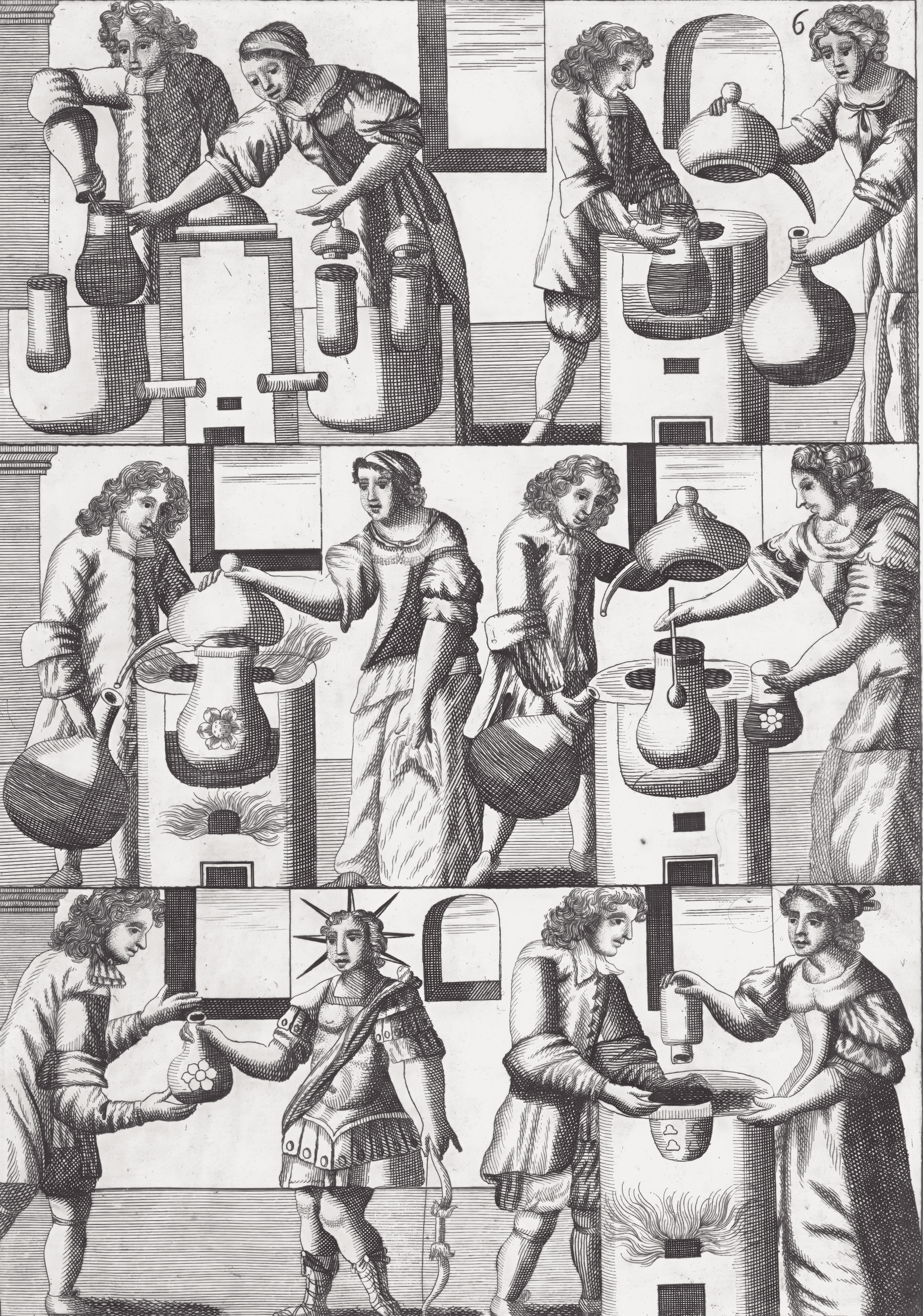
Printing in Latin to moderate an English audience was not Casaubon's invention; it was a habit with centuries of use behind it, the early modern equivalent of the plain brown wrapper. Physicians did it, translators of Ovid did it, and publishers of medical and occult material did it routinely. The veil was thin. Anyone determined to know what the Latin said could find a clergyman to translate. But the veil shifted responsibility. Casaubon could tell himself he had published everything, faithfully, from the original; and simultaneously that he had not thrust the wives' ordeal into plain English on every street corner.
The strategy failed, as veils usually do. Later retellings, and eventually complete modern editions of the diaries, made the 1587 action among the most discussed episodes in the entire Dee corpus. What Casaubon confined to Latin is now the passage most people mean when they say they know the story.
The Latin in Casaubon's 1659 edition is not an ornament of scholarship; it is a fence. And a fence tells you, more plainly than any catalogue entry, exactly where an editor believed the danger in his own book lay.
For the reader who wants to confront the 1587 material directly, including what the spirits said and what the four subscribers answered, the relevant portion of Casaubon's text is now available in a modern setting. Our own A True and Faithful Relation, Volume III covers this stretch of the diaries, so the action that Casaubon half-buried can be read straight through, in English, with the arguments and the anguish intact.
Two cautions belong with any retelling. First, the legend that Dee's diaries were found decades after his death in a secret compartment or hidden chest should be labeled what it is: a story, frequently repeated, that the documents do not support. The documented chain runs from Dee's papers into the Cotton collection and thence into the British Museum, where the Cotton Appendix manuscripts remain. Second, Dee's death year appears as both 1608 and 1609 in commonly consulted sources, and should be verified against the standard biographical reference before being asserted.
The rest is history with its seal intact: a command in April 1587, a covenant by May, a partnership dead within two years, and a seventeenth-century editor who told us, in his own preface, that he wanted to promote religion rather than satisfy curiosity. Then he reached for the one tool that let him do both.
Read the book
Related Articles
Continue through articles sharing this topic.
Prague, 27 March 1587. Two English alchemists stand summoned before a bishop of the Church, accused of necromancy, in a city where the Emperor keeps…
6 min read
In September 1583 a Polish aristocrat slipped out of England after four months of banquets, borrowed money, and conversations with angels.
7 min read
In the winter of 1770, a tall Scottish traveller stood at a marshy spring in the Ethiopian highlands called Gish Abay and, by his own account, obliged his…
6 min read
On the evening of 17 April 1584, in a rented house on Szczepańska Street in Cracow, Edward Kelley stood up in the middle of a session, told John Dee that…
7 min read