 Xognosis EsotericaArcane Publishing Studio
There is a story about alchemy that almost everyone knows. For centuries, so it goes, clever men wasted their lives stirring molten metals and muttering over obscure symbols, chasing a way to turn lead into gold. Then real science arrived, the mysticism fell away, and what survived the purge became chemistry.
Share
There is a story about alchemy that almost everyone knows. For centuries, so it goes, clever men wasted their lives stirring molten metals and muttering over obscure symbols, chasing a way to turn lead into gold. Then real science arrived, the mysticism fell away, and what survived the purge became chemistry. Alchemy failed; chemistry succeeded. It is a tidy story, and it is wrong. Not wrong in its details, exactly, since alchemists really did pursue transmutation and really did cloak their procedures in secrecy. It is wrong in its architecture. Over the past three decades, historians of science led by William R. Newman and Lawrence M. Principe have dismantled the old narrative, and what they found in its place is stranger and more interesting: a discipline that weighed its residues, tested its metals with systematic rigor, and built a theory of matter out of what those tests revealed.
The dismissal was not fringe opinion. It came from serious historians writing in the middle of the twentieth century, at the moment when the Scientific Revolution was being cast as the triumph of reason over medieval confusion. As Newman documents, alchemy was judged a "mystic science" by Marie Boas (1958), a "pathology of thought" by E. J. Dijksterhuis (1961), and "the greatest obstacle to the development of rational chemistry" by A. Rupert Hall (1962) (all quoted in Newman 2011). If alchemy was a disease, chemistry was the recovery.
The trouble is that the patient left extensive records, and the records do not describe a disease. They describe workshops, furnaces, balances, and arguments.
The first pillar of the corrective is linguistic. In Latin, French, and English sources before the eighteenth century, the words for alchemy and chemistry had not yet hardened into the opposition we project onto them. Practitioners used overlapping terms for a single field, and so modern historians have adopted "chymistry" to name it. As Newman puts it, "there was no broadly accepted, sharp demarcation between alchemy and chemistry until the eighteenth century. 'Chymistry,' for the most part, still included the transmutation of base metals (chrysopoeia) as a goal."
That single sentence dissolves the familiar picture. The men who assayed ores for mining companies, distilled medicines, and improved metallurgy were frequently the same men, reading the same books, who hoped to transmute metals. Transmutation was not an occult hobby bolted onto practical chemistry. It was a research program inside the discipline, resting on the argument that if the metals are compounds, they can in principle be decomposed and recomposed.
Nowhere is the experimental character clearer than in the Summa perfectionis, the great Latin alchemical treatise composed around the end of the thirteenth century and transmitted under the name Geber. Newman, who edited and translated the critical edition, describes its program plainly: "Geber's main work, the Summa perfectionis, subjects the then-known metals to a barrage of tests, including cupellation, cementation, calcination, burning with sulfur, exposure to organic acids, amalgamation with mercury, and so forth, in order to determine the composition of the metals."
Each of those operations was known to assayers and metallurgists. What was new was their use as evidence. In Newman's words, "the self-conscious use of these artisanal techniques as tests for determining the fundamental components of matter was something that lay beyond the purview of common assaying and metallurgy." A smith cups lead to refine silver. The author of the Summa cups metals to find out what they are made of. The gap between those two intentions is roughly the gap between craft and experimental science.
The attribution question deserves honesty. The name Geber was a mask; the work is called Pseudo-Geber for that reason. Newman argues, in his critical edition, that the real author may have been Paul of Taranto, a Franciscan friar whose Theorica et practica was probably composed around 1300. It is an argument, widely cited but still an attribution, and should be presented as such.
What is not in dispute is the book's afterlife. For three centuries the Summa circulated as perhaps the most authoritative statement of alchemical theory and practice in the West, which is why we offer a modern edition, Summa Perfectionis: The Sum of Perfection, for readers who want to meet the text directly.
Two further findings carry the corrective into the heart of what we call science. First, matter theory. In his 2011 survey of the recent historiography, Newman summarizes: "We now know that medieval and early modern alchemists employed experiment in concert with theory to demonstrate the existence of stable 'chymical atoms,' which were thought to combine with one another according to a hierarchical theory of matter." Alchemical corpuscularism, developed in dialogue with scholastic Aristotelianism, fed directly into the matter theories of Daniel Sennert and eventually Robert Boyle. The Sceptical Chymist of 1661, long treated as chemistry's declaration of independence, reads differently once you recognize how much of its argumentative equipment was forged in alchemical workshops.
Second, the balance sheet. Newman again: alchemists "were among the first explicitly to enunciate the principle of mass balance and to show that materials are compounded of the ingredients into which they can be physically decomposed." The clearest statement comes from Jan Baptista van Helmont in the mid-seventeenth century, whose dictum, in the translation by Newman and Principe, reads: "Nothing comes into being from nothing. Hence weight comes from another body weighing just as much." That is conservation of mass in chymical dress, more than a century before Lavoisier. And when Lavoisier defined an element in 1789 as the final limit that analysis reaches, he was restating, in a new idiom, the negative-empirical principle that alchemical authors had long practiced: you know what you cannot decompose.
The revision in one line: alchemy did not fail into chemistry, because there was never a failed thing to fail. There was chymistry, a single experimental discipline with theological and profit-seeking edges, and it developed continuously into modern chemistry while shedding some of its goals and vocabulary along the way.
None of this makes every alchemist a proto-scientist. The medieval world had its con artists, selling transmutation recipes to greedy patrons, and alchemical authors themselves denounced fraud at length. The corrective claims something narrower and firmer: that the core practice of the discipline, its best texts and best practitioners, was experimental and theoretically serious. It also claims that Aristotelianism, long cast as the enemy of experiment, interacted productively with laboratory practice; as Newman notes, alchemical convictions and practices "arose out of the interaction of alchemical practice with scholastic Aristotelianism, long viewed by historians of the Scientific Revolution as antithetical to experiment."
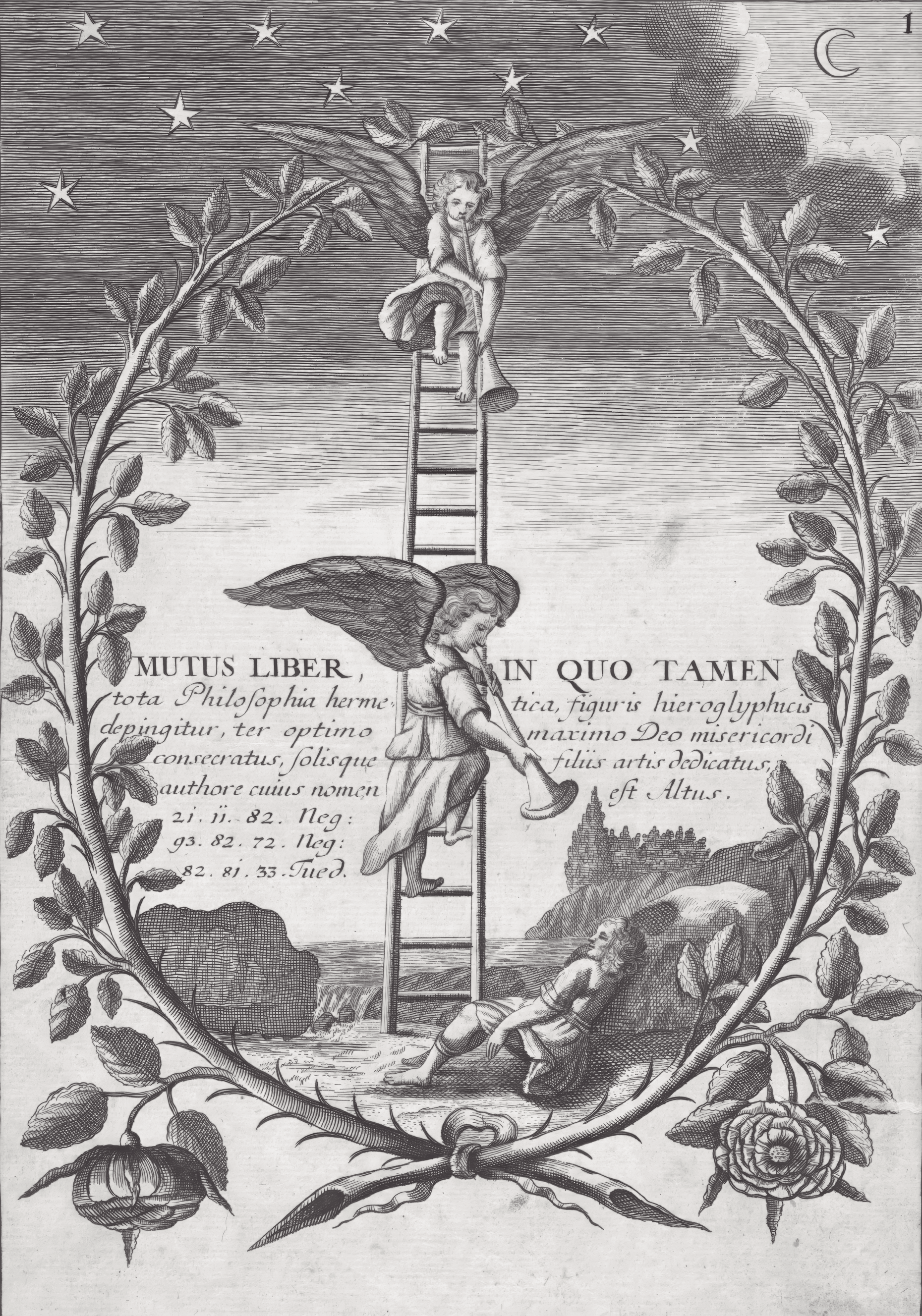
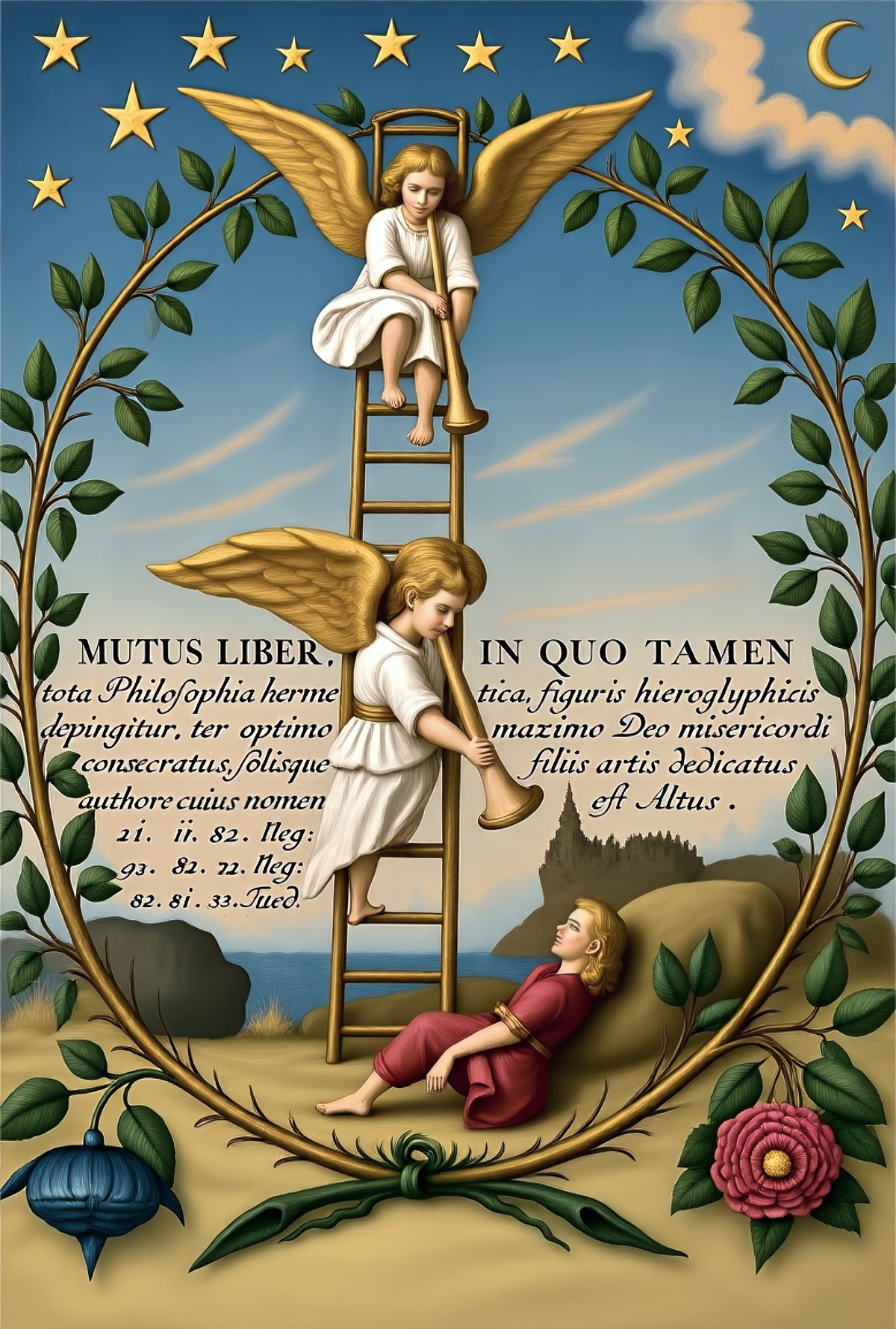
Where does the mystical material fit, the emblems and the silence? Consider the Mutus Liber, the "wordless book" published at La Rochelle in 1677 under the attribution "Altus," which conveys its entire procedure in fifteen plates without a sentence of text. It stands squarely inside the tradition we have been describing, late, sophisticated, and deliberately mute. Claims about what its images mean are interpretive by design; there is no text to check them against. Our Mutus Liber Reimagined (Full Color) edition presents the plates in full color for exactly that kind of patient looking.
Read the book
Related Articles
Continue through articles sharing this topic.
Esoteric literature has a way of swallowing beginners whole. You pick up one book about alchemy, and within a week you have six tabs open about Renaissance…
7 min read
Somewhere around the year 1310, a Latin author sat down to write a book about furnaces.
6 min read
Sometime around the end of the thirteenth century, a writer working in Latin composed a long, disciplined treatise on the art of alchemy.
6 min read
Ask most people who Jabir ibn Hayyan was and you will get a biography with the confidence of an encyclopedia entry: born at Tus in 721, son of a druggist,…
6 min read
Related Books
Catalog volumes sharing this article’s lead tag.
Mutus Liber Reimagined (The Silent Book): A Modern Restoration & Commentary in Full Color Discover the Hidden Wisdom of Alchemy's Most Enigmatic Masterpiece, Now in Stunning Full…
Xognosis Esoterica
Mutus Liber Reimagined (The Silent Book): A Modern Restoration & Commentary in Monochrome Discover the Hidden Wisdom of Alchemy's Most Enigmatic Masterpiece, Now in Striking Monoc…
Xognosis Esoterica
Rendered Faithfully for the Modern Seeker Summa Perfectionis, or "The Sum of Perfection," is widely regarded as the most influential alchemical treatise of the Latin Middle Ages.…
Xognosis Esoterica