 Xognosis EsotericaArcane Publishing Studio
Esoteric literature has a way of swallowing beginners whole. You pick up one book about alchemy, and within a week you have six tabs open about Renaissance magic, a Coptic dictionary in your cart, and no memory of what your original question was. The problem is rarely a shortage of material. It is sequence.
Share
Esoteric literature has a way of swallowing beginners whole. You pick up one book about alchemy, and within a week you have six tabs open about Renaissance magic, a Coptic dictionary in your cart, and no memory of what your original question was. The problem is rarely a shortage of material. It is sequence. These traditions were written across two millennia, in several languages, for readers who already shared assumptions the modern reader does not. Read in the wrong order, the books feel opaque. Read in a sensible order, they start talking to each other.
This guide offers that order: a staged path through seventeen books, five of them editions we publish ourselves and twelve classics available in any good printing. The full roster appears at the end, numbered, so you can check the arithmetic.
Start with secondary books, and resist the urge to skip them. A fifty-page introduction to a tradition saves you a hundred pages of confusion inside its scriptures.
For Gnosticism, begin with Gnosticism Explained. The reason is a matter of what Gnosticism actually is: a family of movements rooted in the second century whose original texts were mostly lost for some fifteen centuries. As the Gnostic Society Library puts it, "The discovery and translation of the Nag Hammadi library, initially completed in the 1970's, has provided impetus to a major re-evaluation of early Christian history and the nature of Gnosticism." That re-evaluation is still running, and scholars actively debate how coherent a category "Gnosticism" even is. A modern introduction carries that debate honestly in a way the ancient texts never will, because their authors never imagined a category called Gnosticism either.
The same logic governs the Fourth Way. G. I. Gurdjieff's teaching reached the public largely through his students, and the student to read is P. D. Ouspensky, whose In Search of the Miraculous recounts meeting Gurdjieff and attending his lectures in St. Petersburg and Moscow between 1915 and 1917. Ouspensky died in 1947, and his students published the book two years later. Read Ouspensky raw and the system can feel like revealed truth. Read it with a guide such as The Fourth Way Explained at your elbow, and you can tell the documented historical teaching apart from the legends Gurdjieff told about its origins, stories of ancient monasteries that no historian has verified. If the lectures hook you, Gurdjieff's own Meetings with Remarkable Men and Ouspensky's The Fourth Way extend the record, with the same caution.
Every tradition has one short classic, and the beginner's mistake is to start with the long ones. In the Buddhist branch of this path, the short classic is the Dhammapada: 423 verses in 26 chapters, running from the Yamakavagga (Pairs) to the Brahmanavagga, readable in an evening and worth returning to for a lifetime. Multiple established English translations sit side by side, those of Acharya Buddharakkhita and Thanissaro Bhikkhu among them, and comparing two renderings of the same verse teaches you how translation shapes meaning. The opening verse, in Buddharakkhita's rendering, sets the tone: "Mind precedes all mental states. Mind is their chief; they are all mind-wrought." An annotated edition such as The Dhammapada tells you where a verse echoes a longer sutta and where different schools have read a phrase differently.
Now, and only now, the codices. In 1945, a find in Upper Egypt transformed the study of early Christianity. In the words of the Gnostic Society Library: "The Nag Hammadi Library, a collection of thirteen ancient books (called 'codices') containing over fifty texts, was discovered in upper Egypt in 1945." Popular retellings embellish the discovery with a Bedouin shepherd and a blood feud. The verified facts are the year and the place, and those are enough.
Thirteen codices is a shelf, so the same library page offers a sequence within the collection: "The most readily comprehensible of the Nag Hammadi scriptures is undoubtedly The Gospel of Thomas, with The Gospel of Philip and the The Gospel of Truth as close seconds in order of easy comprehension." The doubled "the" is theirs. Start with Thomas, in the standard modern edition, The Nag Hammadi Scriptures, edited by Marvin Meyer and published in 2007. For a narrative companion, Elaine Pagels' The Gnostic Gospels (1979) is the introduction the Gnostic Society Library itself recommends. Do not treat these texts as the scripture of a unified underground church. They are a diverse archive, and the debates about what to call their authors are part of what you are reading.
With grounding in hand, the path turns to two of the strangest documents in Western esotericism, both seventeenth-century, both concerned with knowledge that resists ordinary language.
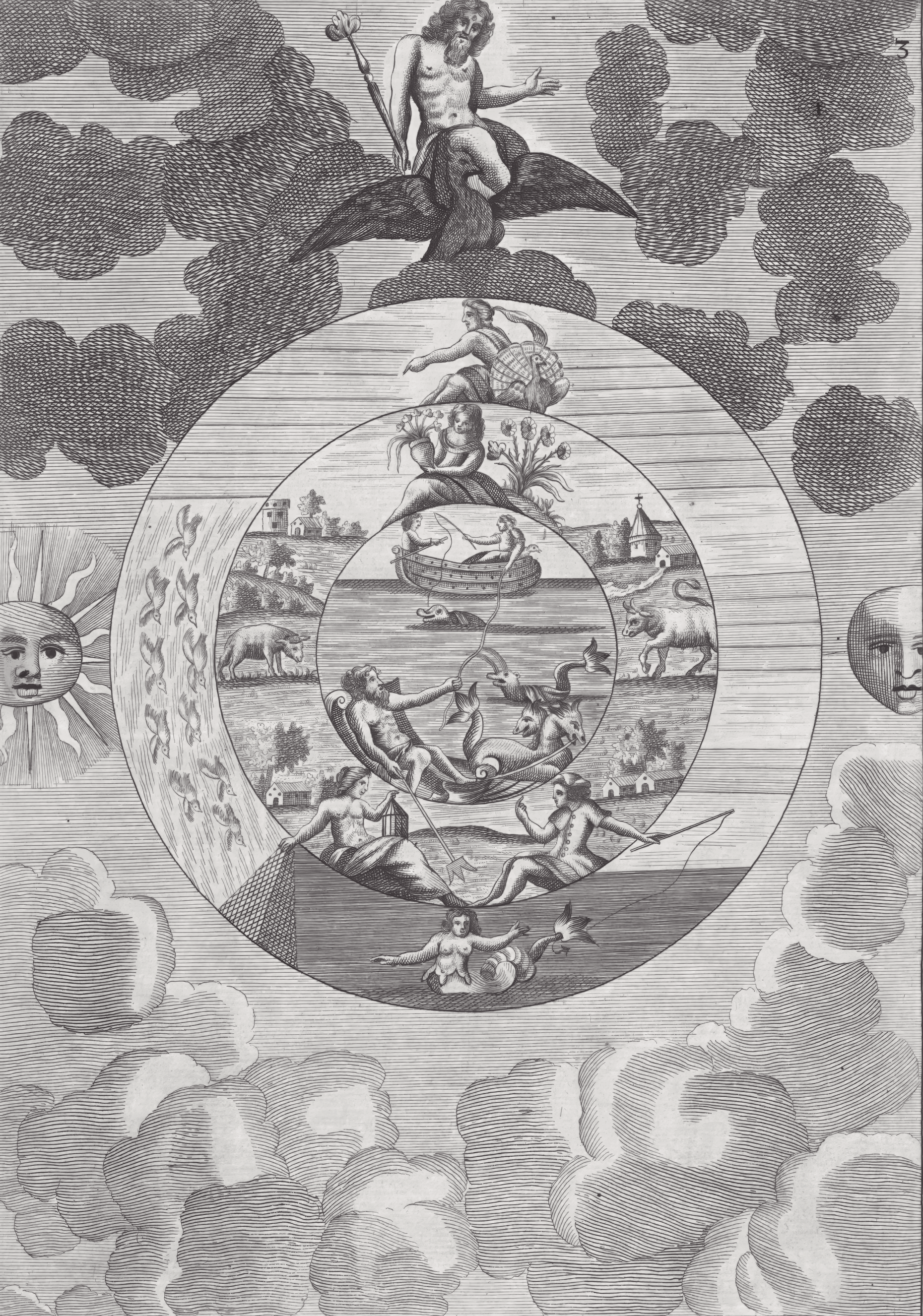
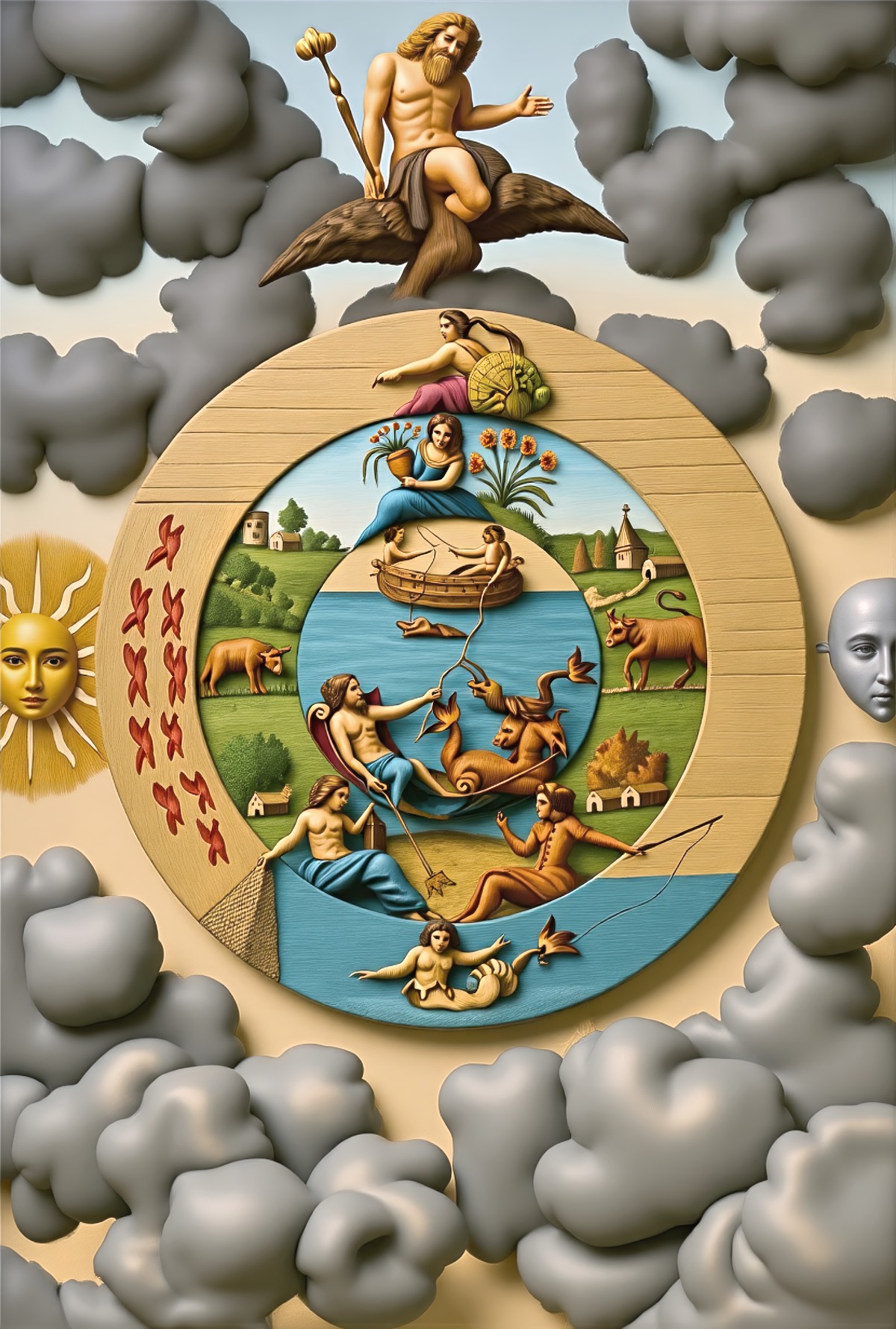
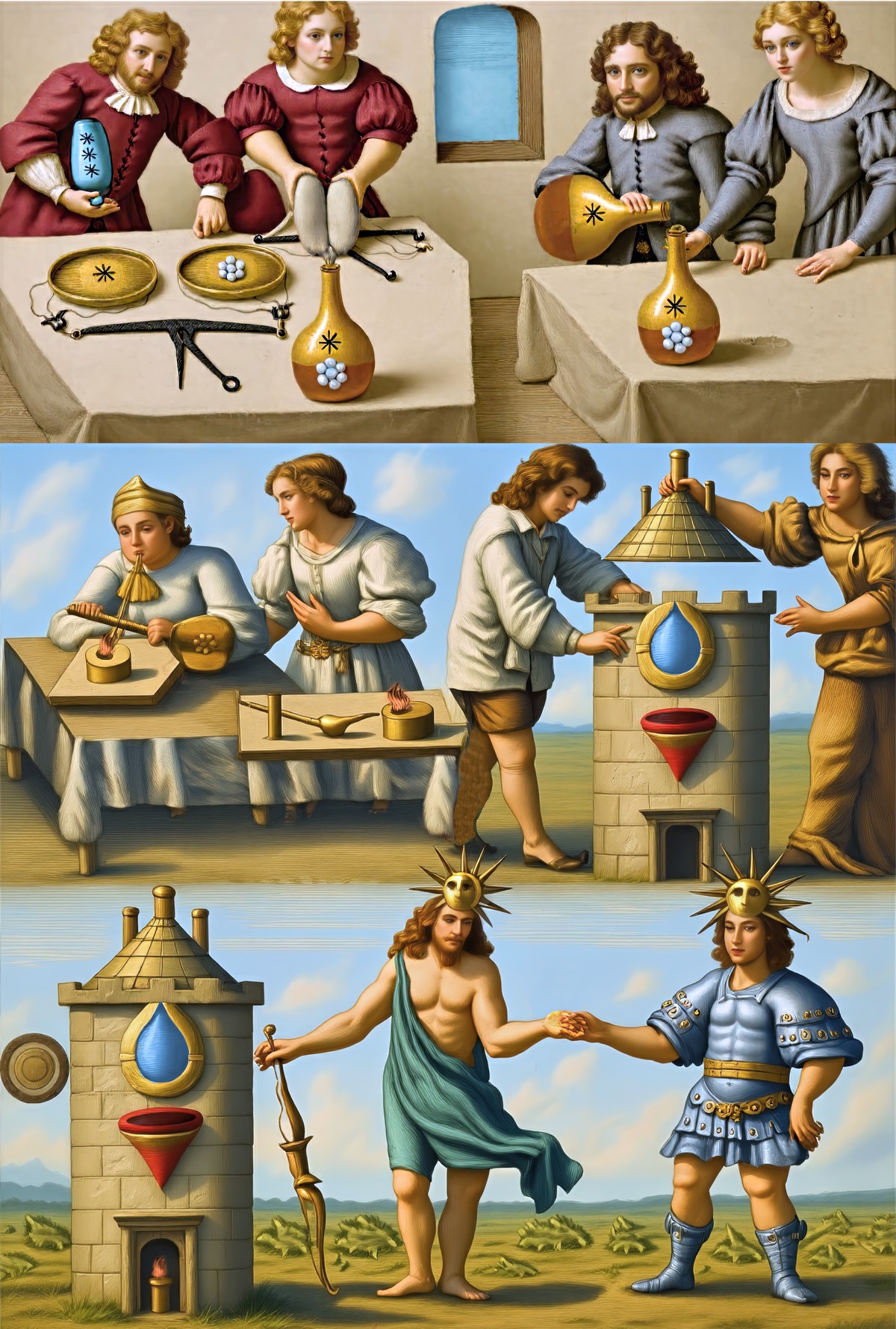
The first is the Mutus Liber, published at La Rochelle in 1677 and counted among the major alchemical books of the Early Modern period. It consists of fifteen plates and almost no words; the title means "mute book." Its authorship is attributed to the pseudonym "Altus," and no verified identity lies behind the name, so treat the attribution as traditional and unresolved. The Library of Congress holds an edition whose plates were re-engraved after the 1677 original, which tells you how prized the images were. Reading it is an exercise in disciplined attention. You look, you note, you look again.
The second is Meric Casaubon's A True and Faithful Relation, published in London in 1659. It preserves the diary records of Dr. John Dee, the Elizabethan mathematician and astrologer, concerning his sessions with the scryer Edward Kelley, through which Dee believed he conversed with angels. Scholars treat Casaubon's volume as a primary record of what occurred in those sessions. What the sessions actually were, genuine contact in Dee's own terms, fraud on Kelley's part, or something harder to name, remains a matter of interpretation, and historians differ. Read it as a record, not as evidence of angels. Dee's own Monas Hieroglyphica (1564), a short earlier work on an esoteric symbol of his devising, is the natural companion. Volume I of our edition, A True and Faithful Relation, covers the opening stretch of the material.
The last stage circles back. Reread Thomas with Casaubon fresh in your mind, and the differences in how revelation gets recorded become vivid. Reread the Mutus Liber's fifteen plates, ideally in a full-color edition such as Mutus Liber Reimagined, after some chemistry or some Dhammapada, and different details surface. The Dhammapada you read in an evening in Stage Two will not be the Dhammapada you read now.
Then widen. Three books of context reward the rereading: Brian Copenhaver's translation of the Hermetica (1992), the standard scholarly English edition of the Corpus Hermeticum; Frances Yates' Giordano Bruno and the Hermetic Tradition (1964), widely credited with pulling esotericism into mainstream historical study; and E. J. Holmyard's Alchemy (1957), a compact history of the art the Mutus Liber practices in images.
Orientation: 1. Gnosticism Explained (Xognosis). 2. The Gnostic Gospels, Elaine Pagels (1979). 3. In Search of the Miraculous, P. D. Ouspensky (1949). 4. The Fourth Way Explained (Xognosis). 5. Meetings with Remarkable Men, G. I. Gurdjieff (English translation, 1963). 6. The Fourth Way, P. D. Ouspensky (1957).
First primary text: 7. The Dhammapada, translated and annotated (Xognosis). 8. Dhammapada, Acharya Buddharakkhita's translation (1985). 9. Dhammapada, Thanissaro Bhikkhu's translation.
The codices: 10. The Nag Hammadi Scriptures, edited by Marvin Meyer (2007).
Wordless books and angels: 11. Mutus Liber (1677). 12. Mutus Liber Reimagined (Xognosis). 13. Monas Hieroglyphica, John Dee (1564). 14. A True and Faithful Relation, Volume I, Meric Casaubon (Xognosis edition).
Context and rereading: 15. Hermetica, translated by Brian Copenhaver (1992). 16. Giordano Bruno and the Hermetic Tradition, Frances Yates (1964). 17. Alchemy, E. J. Holmyard (1957).
The esoteric traditions are not one hidden school with one secret. They are many traditions, each with its own texts, its own history, and its own arguments. Read in sequence, secondary before primary, short before long, fact before legend, the books stop being a maze and become a path.
Seventeen books sounds like a commitment. Spread across a year of evenings, it is roughly one book every three weeks, and nothing here demands more than attention. Begin with the introductions. Trust the sequence. The obscure passages will still be obscure, but you will know which tradition a passage belongs to, who wrote it, when, and what the honest scholars still argue about.
Read the book
Related Articles
Continue through articles sharing this topic.
In January 1896 the German scholar Carl Reinhardt bought a Coptic papyrus codex in Cairo.
7 min read
Every few decades, someone translates the esoteric classics again. New Enoches appear. New Pistis Sophias.
6 min read
Pick a shelf of spiritual books at random and you will find, somewhere in the first twenty pages, the same accusation: you are not actually awake.
7 min read
For roughly seventeen centuries, if you wanted to know what the Gnostics taught, you had to ask the people who wanted them destroyed.
6 min read
Related Books
Catalog volumes sharing this article’s lead tag.