 Xognosis EsotericaArcane Publishing Studio
Somewhere around the year 1310, a Latin author sat down to write a book about furnaces. He signed it with a name that was already five hundred years old: Geber, the Latin rendering of Jabir ibn Hayyan, the 8th/9th century polymath whose reputation had crossed from Arabic into European legend. The signature was false.
Share
Somewhere around the year 1310, a Latin author sat down to write a book about furnaces. He signed it with a name that was already five hundred years old: Geber, the Latin rendering of Jabir ibn Hayyan, the 8th/9th century polymath whose reputation had crossed from Arabic into European legend. The signature was false. The furnaces were real. The book, the Summa Perfectionis, would shape laboratory writing throughout the Middle Ages, and its author, so far as modern scholarship can tell, a friar named Paul of Taranto, writing under a borrowed name in southern Italy. A millennium earlier and a continent away, a different kind of laboratory was being described in verse: the human mind, observed with the same patience that a metallurgist gives his ores. The Dhammapada opens with a claim that reads like a laboratory postulate. "Mind precedes all mental states. Mind is their chief; they are all mind-wrought."
Two traditions, two instruments, one shared conviction: that transformation is real, that it proceeds by degrees, and that the transformed thing can be recognized by someone who knows what to look for.
The Summa Perfectionis, dated slightly before 1310 on the evidence summarized in William R. Newman's critical edition, is not the cryptic riddle-book of popular alchemy cliché. It contains practical directions: how to build furnaces, how to prepare mineral acids including aqua fortis and aqua regia, how to assay metals and separate their components. The same corpus includes the Liber Fornacum, the Book of Furnaces, whose very title announces a preoccupation with apparatus. And beneath the recipes runs something stranger: a corpuscular theory of matter, an account of bodies composed of particles, which Newman's work placed centuries before the seventeenth-century mechanical philosophies.
The Dhammapada makes a parallel move in a different register. Its 423 verses in 26 chapters, assembled within the Pali Canon's Khuddaka Nikaya, treat the mind as something worked upon. Verse 122, in Acharya Buddharakkhita's translation, gives the method plainly: "Drop by drop is the water pot filled. Likewise, the wise man, gathering it little by little, fills himself with good." The image is domestic, almost mundane. Nobody fills a water pot by wishing. You carry, you pour, you repeat, and one day the vessel is full.
Both traditions thus reject the sudden miracle. The Summa's gold, if it exists, exists at the end of a sequence of operations, each of which can fail. The Dhammapada's good is accumulated the way water accumulates, and verse 116 supplies the urgency: "Hasten to do good; restrain your mind from evil."
Here the honest historian has to slow down, because both texts arrive wearing names that are not quite their own.
The attribution of the Latin Geber corpus to Jabir ibn Hayyan was first questioned in the late 19th century, and the case has only strengthened since. Newman tentatively identified the Summa's author as Paul of Taranto, a 13th-century Franciscan from Apulia, in studies published in 1985; the identification is often accepted as likely but not proven. It is a scholarly hypothesis, and the article you are reading labels it as one. What is beyond serious dispute is the pseudepigraphy itself: the borrowing of an Arabic master's authority by a Latin writer who presumably calculated, correctly, that a famous name travels further than an obscure one.
The Buddhist anthology presents a subtler version of the same problem. Canonical tradition presents the Dhammapada's verses as words of the Buddha himself. Critical scholarship sees an anthology compiled over time: a Gandhari-language Dharmapada in Kharosthi script, believed written in the first or second century CE, shares roughly 330 to 340 verses with the Pali version across 16 chapters, which points to a common ancestor rather than a single fixed original. That is not an accusation of fraud. It is the normal condition of oral-tradition texts. But it does mean the reader who wants "what the Buddha said" and the reader who wants "what the text preserves" are asking two different questions, and the Dhammapada answers the second.
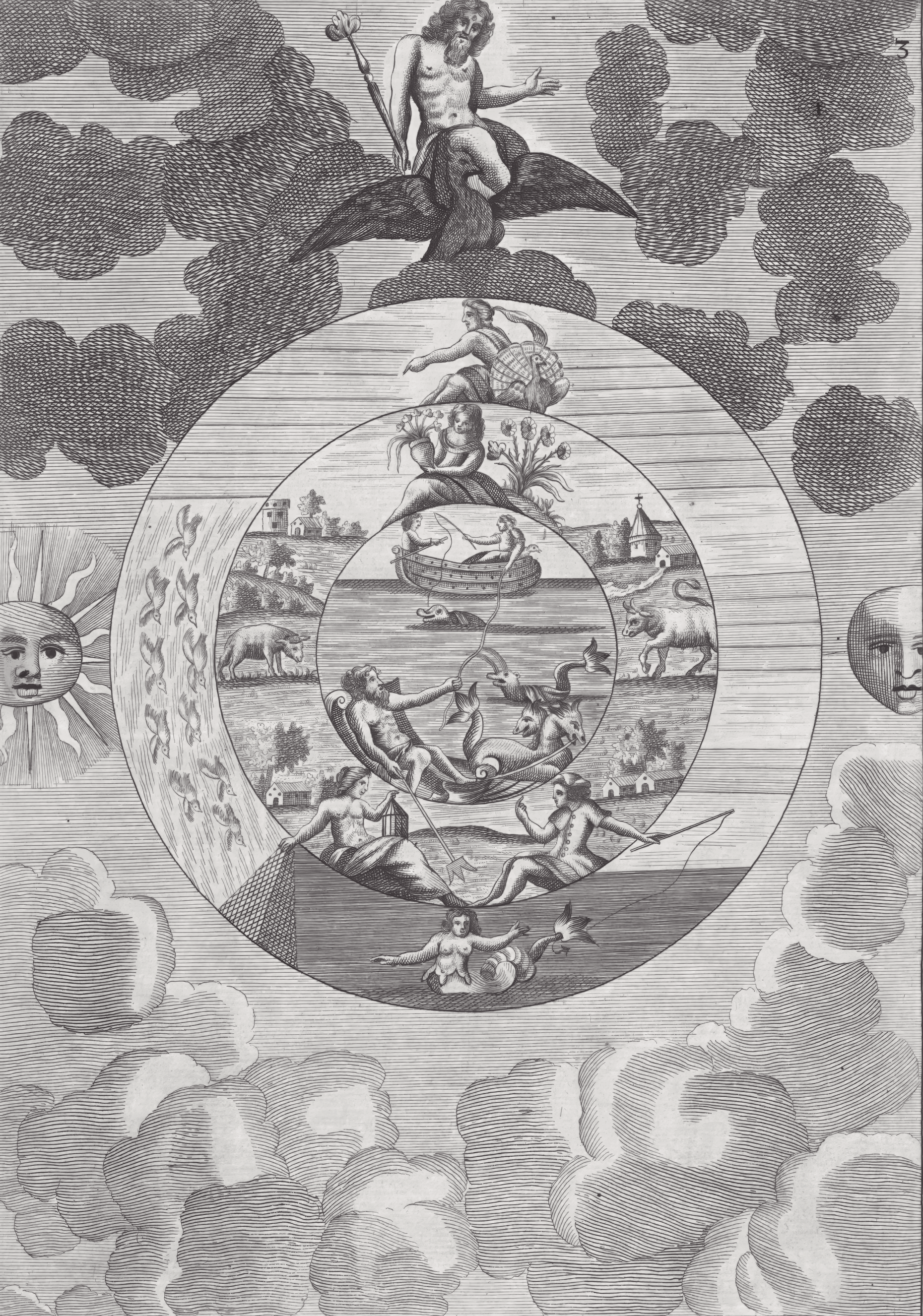
A third example closes the triangle. The Mutus Liber, first published in 1677 by Pierre Savouret in La Rochelle, presents itself as the work of "Altus, a scholar in high chemistry of Hermes" and one Jacob Saulat. Historians regard both names as fictitious; recent scholarship points instead to Isaac Baulot as the likely author. The book's title means Silent Book, and it earns the name: page after page of engraved plates, almost no words, the entire laboratory procedure carried by images alone. Our edition of Mutus Liber Reimagined reproduces the plates in full color.
If transformation is gradual and testable, it is also, in principle, imitable. This is where the two laboratories are least comfortable and most interesting.
An alchemical claim has a surface: gold-colored alloys, impressive demonstrations, the vocabulary of the Summa deployed with fluency. The tradition itself worried about this, and accusations of counterfeit transmutation were a recurring feature of alchemy's history. The present article does not document specific fraud cases, because its verified sources do not support them; readers who want that history should turn to Newman's published work on alchemical deception rather than to folklore.
The spiritual laboratory has its own surface. Verse 5 of the Dhammapada states a law: "Hatred is never appeased by hatred in this world. By non-hatred alone is hatred appeased. This is a law eternal." A law invites testing, and the test the text proposes is not oratory or costume. It is whether suffering follows the speaker the way the wheel follows the ox, to borrow the poem's own image from verse 1. The claim is about consequences, and consequences leave traces in a life over time. The water pot cannot be painted full.
The honest formulation is this: both traditions describe transformations that announce themselves through sustained observation rather than single instants, and both are therefore vulnerable to imitation by anyone patient enough to perform the surface without the substance. Neither tradition is naive about this. The Summa builds its defenses into procedure; the Dhammapada builds them into conduct.
The comparison is not an argument that alchemy secretly influenced Buddhism, or vice versa. The Summa was composed slightly before 1310, in Franciscan circles in southern Italy; the Dhammapada's earliest layers are traced by scholars, tentatively, to around the 3rd century BCE, with the Gandhari manuscript preserving the oldest surviving material from the early centuries CE. They never met. What they share is a posture toward the world: treat the claim as an operation, run the operation, watch what accumulates.
Both the furnace and the verse make the same demand: that transformation be gradual, that it be observable over time, and that its testimony be a changed material or a changed person rather than a changed story.
For readers who want to go deeper, our edition of the Summa Perfectionis makes the Latin corpus accessible in English, and our annotated Dhammapada gives the verses with the commentary tradition attached. Read side by side, they make an odd, productive pair: one book of furnaces, one book of mind, both insisting that the pot fills drop by drop.
Read the book
Related Articles
Continue through articles sharing this topic.
Esoteric literature has a way of swallowing beginners whole. You pick up one book about alchemy, and within a week you have six tabs open about Renaissance…
7 min read
Sometime around the end of the thirteenth century, a writer working in Latin composed a long, disciplined treatise on the art of alchemy.
6 min read
There is a story about alchemy that almost everyone knows. For centuries, so it goes, clever men wasted their lives stirring molten metals and muttering…
6 min read
Ask most people who Jabir ibn Hayyan was and you will get a biography with the confidence of an encyclopedia entry: born at Tus in 721, son of a druggist,…
6 min read
Related Books
Catalog volumes sharing this article’s lead tag.
Mutus Liber Reimagined (The Silent Book): A Modern Restoration & Commentary in Full Color Discover the Hidden Wisdom of Alchemy's Most Enigmatic Masterpiece, Now in Stunning Full…
Xognosis Esoterica
Mutus Liber Reimagined (The Silent Book): A Modern Restoration & Commentary in Monochrome Discover the Hidden Wisdom of Alchemy's Most Enigmatic Masterpiece, Now in Striking Monoc…
Xognosis Esoterica
Rendered Faithfully for the Modern Seeker Summa Perfectionis, or "The Sum of Perfection," is widely regarded as the most influential alchemical treatise of the Latin Middle Ages.…
Xognosis Esoterica