 Xognosis EsotericaArcane Publishing Studio
Two books sit at the far ends of the esoteric shelf, and they answer the same question in opposite ways. The question is how much can be said about the invisible. The Mutus Liber, first printed at La Rochelle in 1677 by Pierre Savouret, says almost nothing at all: it is a book of pictures, nearly empty of words.
Share
Two books sit at the far ends of the esoteric shelf, and they answer the same question in opposite ways. The question is how much can be said about the invisible. The Mutus Liber, first printed at La Rochelle in 1677 by Pierre Savouret, says almost nothing at all: it is a book of pictures, nearly empty of words. Meric Casaubon's 1659 folio of Dr. John Dee's angel conversations says everything it can, filling hundreds of large pages with dated sessions, spirit speeches, and editorial argument. One book withholds language because language is the problem. The other piles up language because record-keeping is the point. Between them they map the whole territory.
The Mutus Liber ("silent book") announced itself through images alone. Its title page carried two names, Altus as author and Jacob Saulat, Sire of Marez, as inventor, and both are described in the standard accounts as fictitious. That invention runs through the book's whole afterlife. The Rev. Arcère, a historian of La Rochelle, later proposed one Jacob Tollé as the author, though his very existence was put in doubt. The attribution most often repeated today is Isaac Baulot, a La Rochelle figure established by the research of Jean Flouret, with further scholars, notably Patrick Sembel, proposing collaborators on the plates and text. The status of these claims differs. The pseudonymous title-page names are documented fact; the Baulot attribution is scholarly consensus reported secondhand, and parts of that chain still carry citation flags in the reference literature.
The first printing was tiny. The common figure given is "no more than a few dozen copies", with twelve original copies traced in major Western libraries. A book meant to be looked at, not read, circulated in almost the quantity of a private communication. A Geneva reprint followed in 1702 with new plates, and a third Paris version appeared around 1760, itself extremely rare. Modern editions have multiplied since 1867.
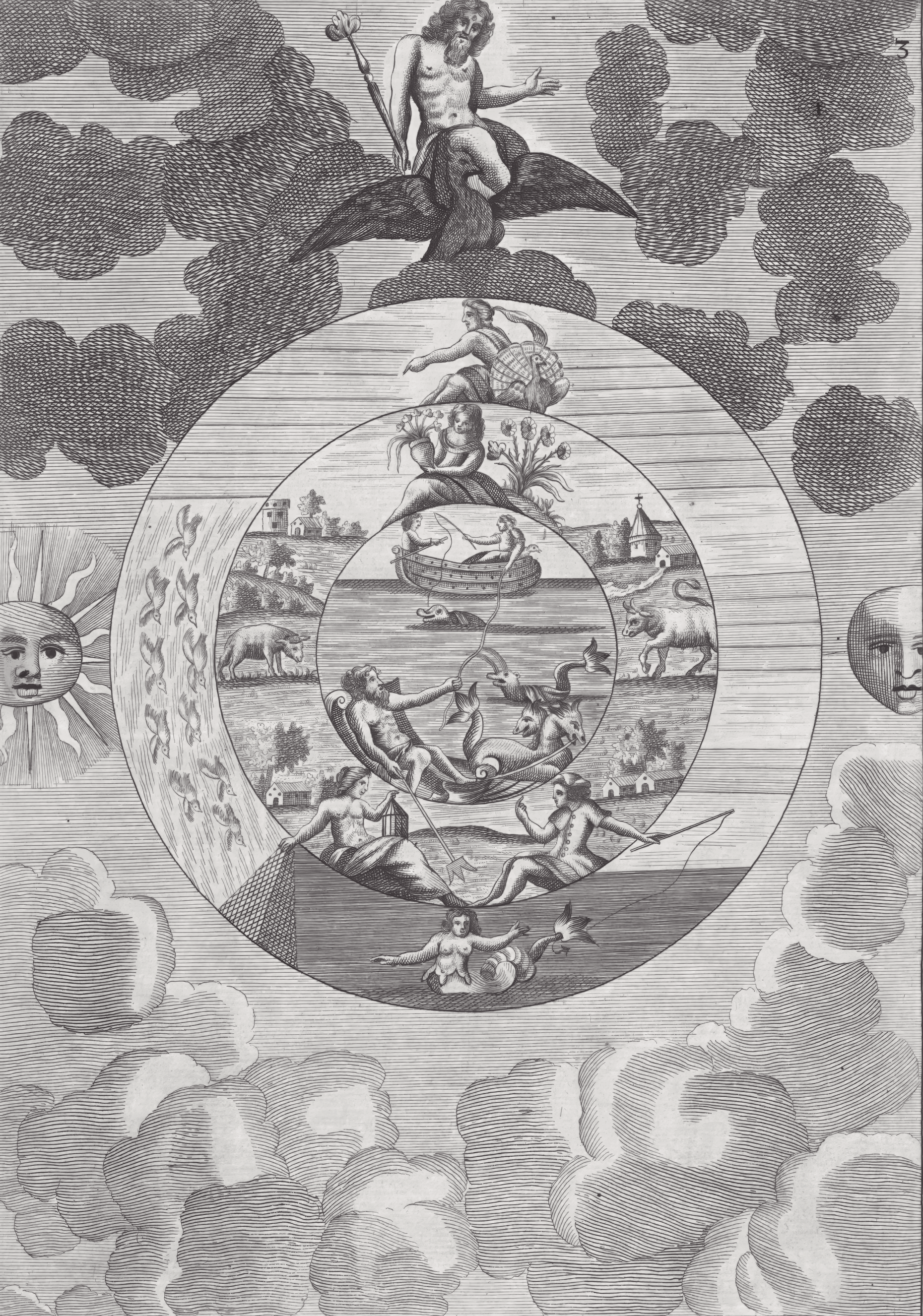
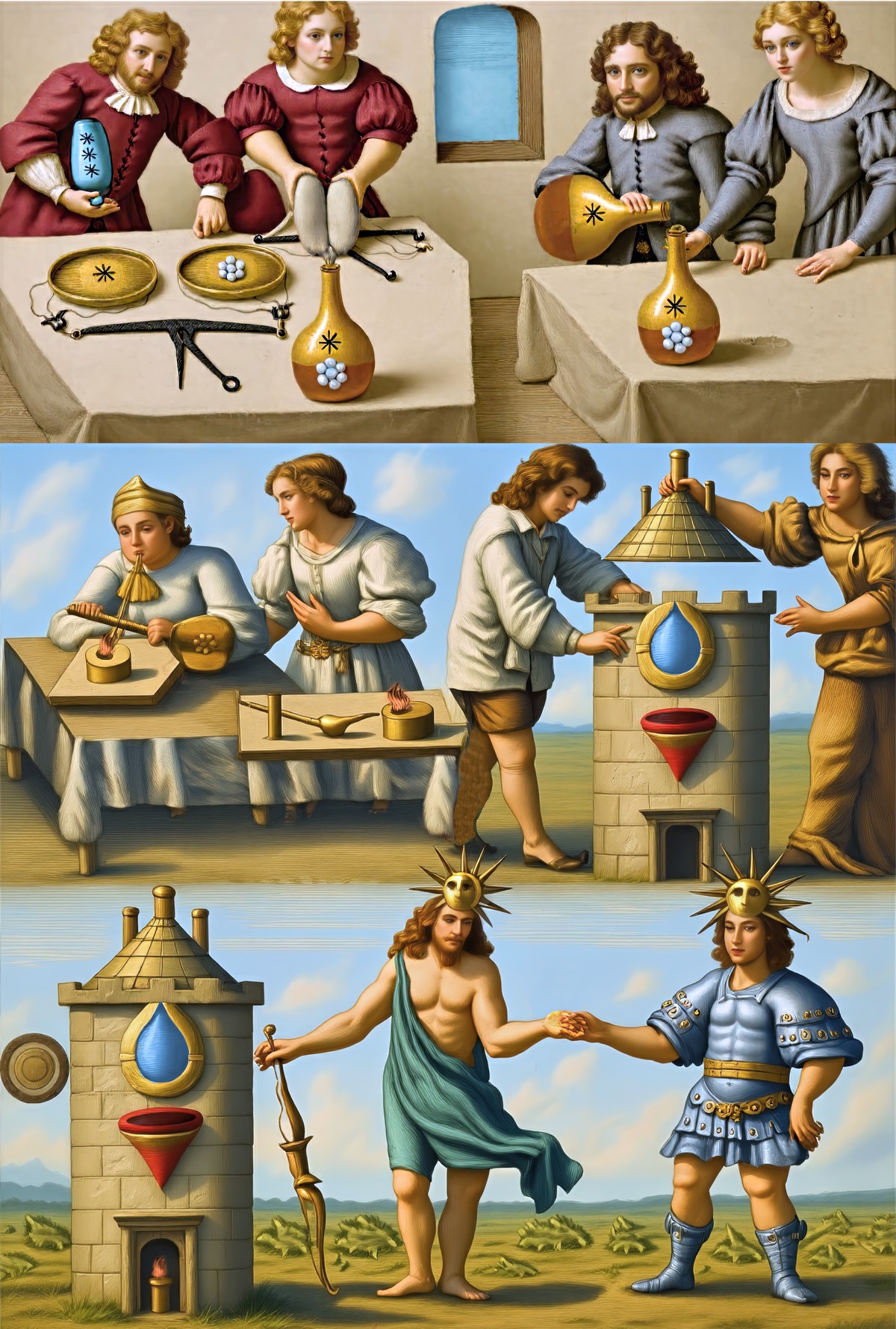
What the pictures show is alchemical work: figures climbing ladders, washes spread on fields to absorb dew, vessels over heat, scenes ordered like a silent film of the Great Work. Interpretation divides cleanly, and the divide is itself instructive. Twentieth-century readers split between those, like Canseliet and Hutin, who took the plates as literal instructions for making the philosopher's stone, and Carl Jung, who read the book as illustrating a quest for spiritual equilibrium. The pictures hold both readings because they commit to neither. That refusal is the method. A text can be argued with; an image waits. Readers who want to spend time inside that silence can find a full-color presentation of the plates in our edition, Mutus Liber Reimagined.
Casaubon's volume is the other pole. Its full 1659 title is a paragraph in itself: "A true and faithful relation of what passed for many yeers between Dr. John Dee ... and some spirits ... His private conferences with Rodolphe Emperor of Germany ... his banishment, and restoration in part. As also letters ... to the said D. Dee." Published in London by D. Maxwell for T. Garthwait, in folio, its collation runs to 31 unnumbered preliminary pages, 9 unnumbered leaves, a body numbered as 448 pages that actually runs 330, a 45-page appendix, and five foldout plates. Our headline calls it a thousand pages, and that is rhetoric rather than measurement; it is a huge folio, generous counting gets you into thousand-page territory, but the honest figure is several hundred large leaves. The mass, however measured, is the message: this is a book that refuses to omit anything.
The manuscripts had a dramatic route into print. Dee died in 1608 or 1609, and his papers scattered. According to the standard accounts, Sir Robert Cotton bought land around Dee's old house and, about ten years after Dee's death, dug for the buried papers, and his son later passed the angel diaries to Casaubon. The digging story is colorful, and it should be held as reported history rather than witnessed fact. What is on the record is the publication and what Casaubon did with it.
Casaubon did not edit neutrally. As the received summary puts it, he "argued in his introduction that Dee was acting as the unwitting tool of evil spirits while believing he was communicating with angels." The preface frames the documents as evidence of deception. Later opinion has gone both ways on Casaubon's motives, some reading the 1659 publication as character assassination, others as responsible scholarship by the lights of its time, and those readings are interpretation, not settled history. What is beyond dispute is the consequence. The book was, in the words of one modern account, "mainly responsible for the image, prevalent for the next two-and-a-half centuries, of Dee as a dupe and deluded fanatic." The longest book in this story manufactured the shortest judgment: fool. Volume I of our edition, A True and Faithful Relation, gives readers the text to weigh that verdict themselves.
Put the two books side by side and a pattern appears. The Mutus Liber trusts nothing that can be said, so it says nothing, and leaves the reader alone with the pictures. Casaubon's folio trusts documentation completely, so it transcribes years of conversations with voices only two men claimed to hear, and frames the whole with an argument. One is a locked door with no key offered. The other is a corridor with every lamp lit, including the lamps that show the corridor's owner in the worst possible light.
Each book exposes the other's weakness. Silence invites projection: the Mutus Liber has sustained mutually exclusive readings for three centuries precisely because it corrects nobody. Exhaustive record invites ridicule: the angel diaries preserve every session, and therefore preserve every failure, which is exactly what Casaubon's preface used against Dee. The alchemist's pictures can neither confirm nor deny the spiritual reading. The magician's transcripts cannot withhold the evidence that later readers used to laugh at him.
There is also a shared honesty. Both books take the invisible seriously as something that occurred, something worth a book of plates or years of shorthand diaries. Neither winks at the reader. The Mutus Liber does not explain its pictures because, on its own terms, explanation would spoil them. Dee did not record his conversations for skeptics; he recorded them because he believed the events demanded witnesses. Casaubon, hostile as he was, still printed the material whole, and so became the reason we can read it at all.
The shortest esoteric book and the longest agree on one thing: the invisible cannot be paraphrased. One shows it and stops; the other transcribes it and lets the transcript testify. Everything between those two gestures is commentary.
Read the book
Related Articles
Continue through articles sharing this topic.
Some books resist being read aloud. You can summarize a novel over dinner, and a history book lends itself to bullet points, but a certain strain of…
7 min read
A book with no sentences is a bold wager. In 1677, at La Rochelle on the French Atlantic coast, the publisher Pierre Savouret printed a slim volume of…
6 min read
The Mutus Liber arrived in 1677 as a book with almost no words in it. Fifteen engraved plates, published in La Rochelle by Pierre Savouret, credited to an…
5 min read
The Mutus Liber, the "silent book" of alchemy, has no text to argue with. A sequence of engraved plates, a title page, and little else: no preface, no…
5 min read
Related Books
Catalog volumes sharing this article’s lead tag.