 Xognosis EsotericaArcane Publishing Studio
The Mutus Liber arrived in 1677 as a book with almost no words in it. Fifteen engraved plates, published in La Rochelle by Pierre Savouret, credited to an "Altus, scholar in high chemistry of Hermès" and one "Jacob Saulat, Sire of Marez," walking the reader through the alchemical work in pictures alone.

Share
The Mutus Liber arrived in 1677 as a book with almost no words in it. Fifteen engraved plates, published in La Rochelle by Pierre Savouret, credited to an "Altus, scholar in high chemistry of Hermès" and one "Jacob Saulat, Sire of Marez," walking the reader through the alchemical work in pictures alone. The credit names were fiction, and were exposed as fiction soon after publication. Only about a dozen original copies survive. And one question hangs over every modern encounter with the book, a question that sounds technical but turns out to be philosophical: should those engravings be colored?
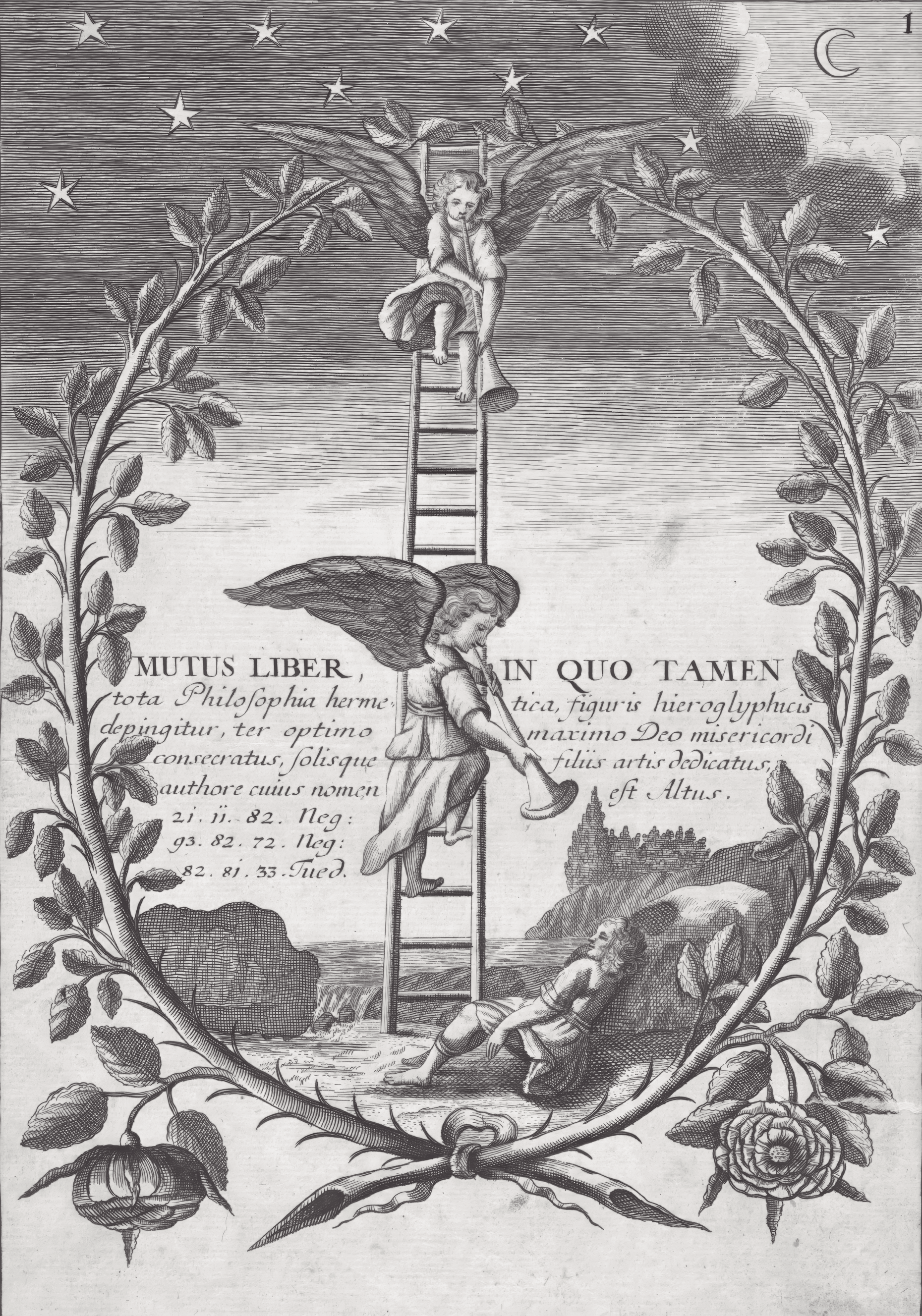
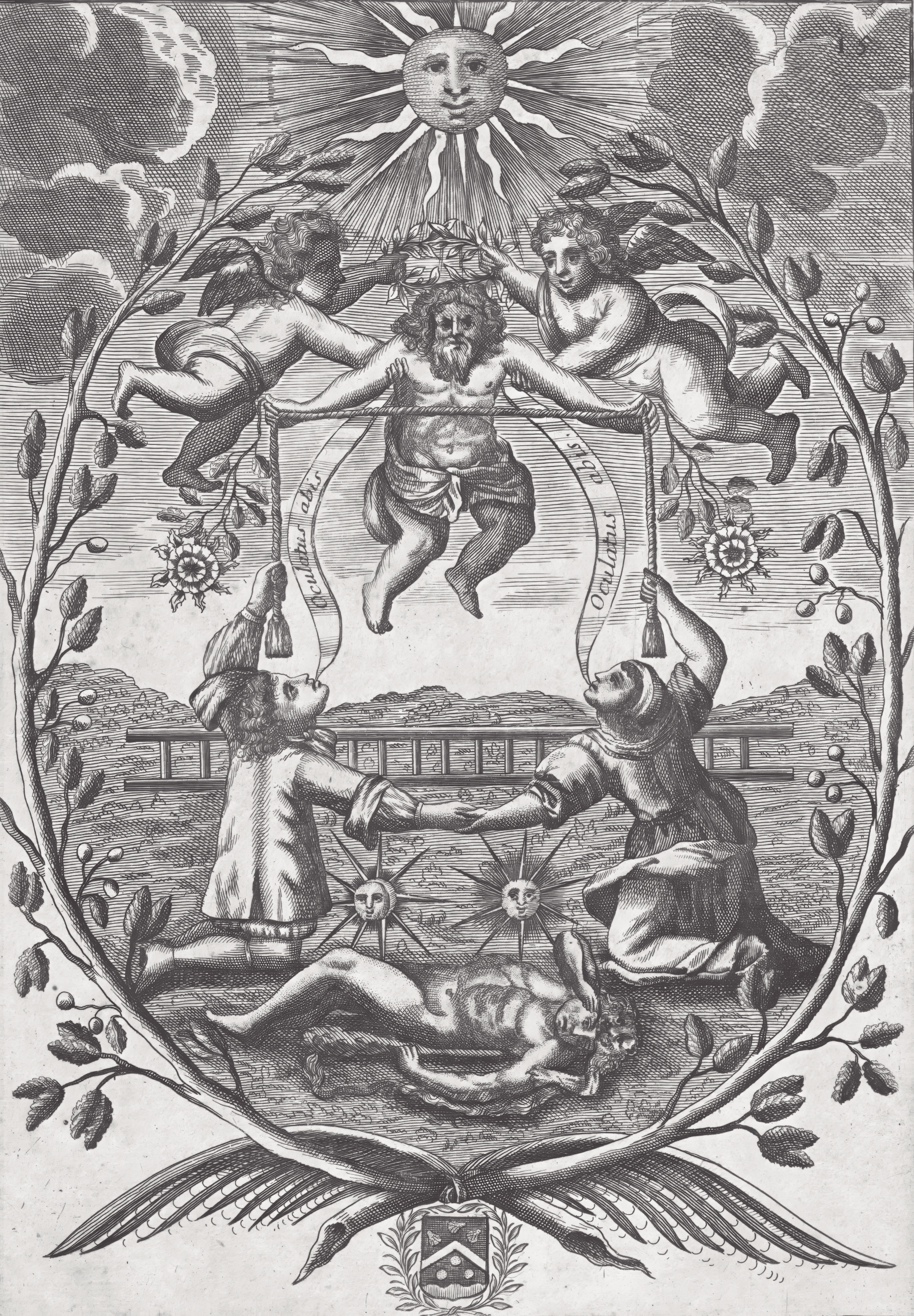
Start with what is known. The 1677 La Rochelle printing, the publisher, and the fifteen-plate count are matters of record. Most images readers recognize today, however, are not quite those plates at all. In 1702 Jean-Jacques Manget's Bibliotheca chemica curiosa issued re-engraved versions, and these became the more commonly reproduced set. The familiar monochrome Mutus Liber is often, strictly speaking, the eighteenth-century copy rather than the seventeenth-century original.
Color itself was never a foreign idea in print culture. Until after 1850, the only way to produce a printed image in color was to apply watercolor by hand after printing, according to the Lewis and Clark Trail Alliance's primer on engraving, and the practice was common enough that historians of cartography now study it with pigment analysis. Whether any copy of the 1677 edition was colored early in its life is a different matter. No verified example is known. The safest statement is cautious: the 1677 edition is assumed to have circulated monochrome, on the strength of an absence of evidence rather than a positive finding.
The one candidate for an old colored copy refuses to sit still. A manuscript in the Library of Congress is cataloged as containing hand-colored Mutus Liber plates, but their date is uncertain. Stanislas Klossowski de Rola cited a catalog entry reading "Liber Mutus (ca. 1790?) in French 43p. with hand-colored plates," and the Wilson catalogue describes the plates as "copper-plate engravings, coloured by hand." That question mark inside "ca. 1790?" is doing honest work. So is the surrounding doubt: McLean himself argues the item cannot contain colored engravings, and may instead be a manuscript drawn in pencil and then painted. Someone, at some point, took a brush to Mutus Liber images. We cannot say who, or when, or on what authority, or even whether they worked from printed plates.
In June 1999 the scholar and colorist Adam McLean did the same thing deliberately and on the record. "I have now (June 1999) painted hand coloured versions of the fifteen pictures that make up the Mutus liber series," he wrote. He worked, he says, from the plates of the original La Rochelle 1677 edition rather than the more commonly reproduced ones from the later re-engraved version in Manget's Bibliotheca chemica curiosa of 1702. His choices were considered ones.
His stated purpose is worth quoting in full, because it concedes the whole argument and then answers it:
"I believe this hand colouring makes these images even more accessible, and I have tried to use a consistent colouring scheme to emphasise the various elements of the symbolic sequence." (Adam McLean, 1999)
McLean does not claim to be recovering historical color. He is interpreting. His colors encode his own reading of the symbolic sequence, an argument in pigment about which elements matter and how they relate. His book-length commentary reads the fifteen plates as a synthesis of spiritual, soul, and physical alchemy, and the coloring scheme serves that reading. This is the honest version of the colorist's art: a modern act, signed and dated, offered as an aid rather than a restoration.
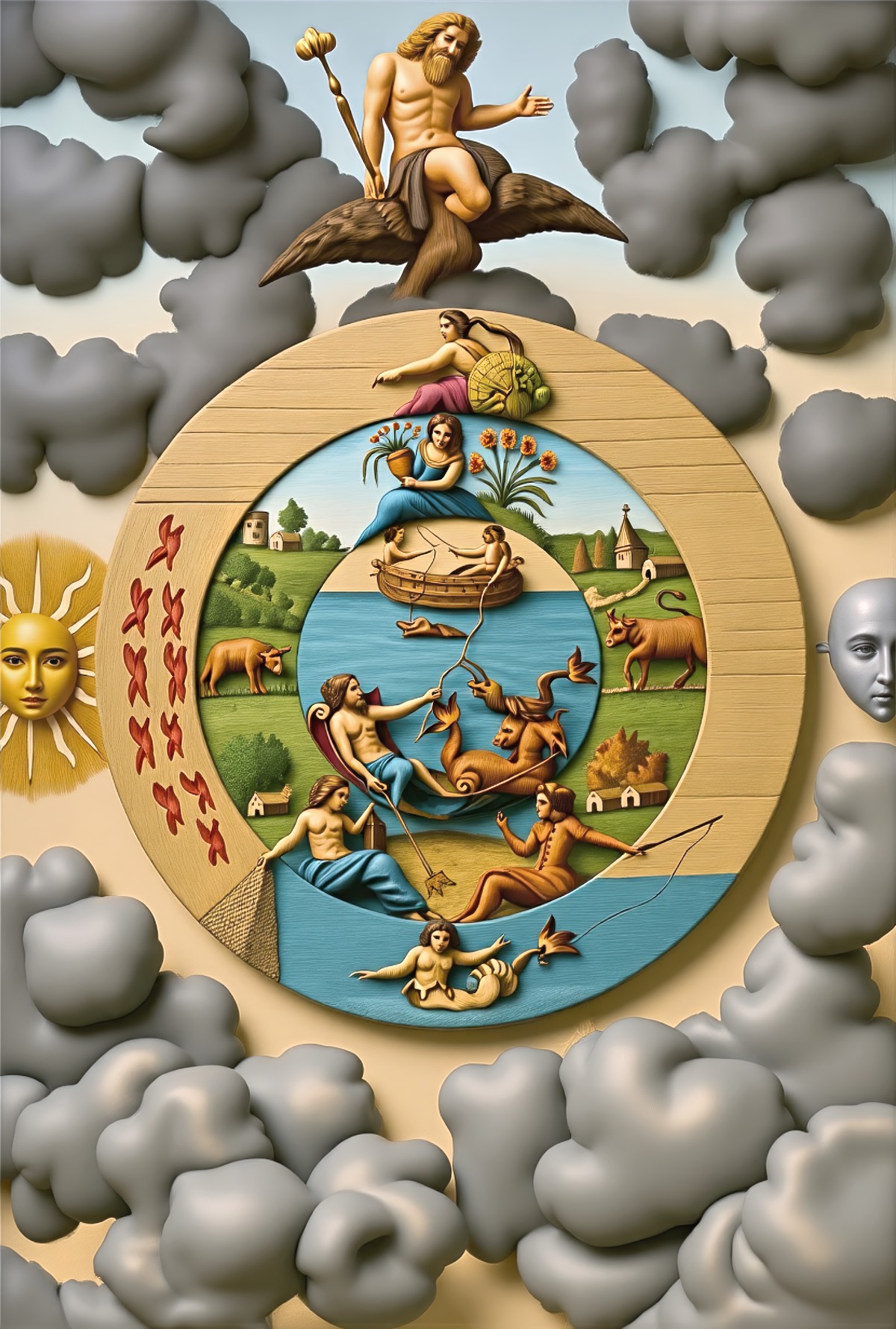
Set the episodes in chronological order and a pattern appears. Manget's engravers recut the images in 1702 and changed what most readers would ever see. An anonymous hand, possibly around 1790, colored images for reasons unknown. McLean colored all fifteen plates in 1999 and told us exactly why. Each link is an interpretation layered over the 1677 originals, and each link changed what the book communicates. Color is never neutral on an emblematic image. If a colorist paints a vessel red in a plate about the reddening stage, the paint states an allegorical position.
This is where the question stops being technical. A hand-colored Mutus Liber is not a corrupted Mutus Liber. Neither is it a more authentic one. It is the book wearing someone's reading of it, visibly. The 1677 engraver worked in line and tone; the colorist works in doctrine.
Xognosis has published the Mutus Liber in two editions, a full-color Reimagined edition and a monochrome companion, because the question has two honest answers. The reimagined plates use modern color methods, including AI-assisted recoloring, and by the standard this history sets they belong at the end of the chain of interpretive acts that runs from Manget's engravers through the unknown Library of Congress colorist to McLean's brushes. They are a 2026 reading, not a recovery of 1677. The monochrome edition keeps the line-only experience for readers who want to meet the images the way their first audience plausibly did.
We flag which links are historical and which are interpretive because the alternative is mystification. The honest answer to the color question is that a 1677 engraving may be colored, provided nobody pretends the color is old.
Read the book
Related Articles
Continue through articles sharing this topic.
Some books resist being read aloud. You can summarize a novel over dinner, and a history book lends itself to bullet points, but a certain strain of…
7 min read
Two books sit at the far ends of the esoteric shelf, and they answer the same question in opposite ways.
6 min read
A book with no sentences is a bold wager. In 1677, at La Rochelle on the French Atlantic coast, the publisher Pierre Savouret printed a slim volume of…
6 min read
The Mutus Liber, the "silent book" of alchemy, has no text to argue with. A sequence of engraved plates, a title page, and little else: no preface, no…
5 min read
Related Books
Catalog volumes sharing this article’s lead tag.