 Xognosis EsotericaArcane Publishing Studio
A single sentence from a fragmented Coptic gospel has done strange work in the modern imagination. "There is no sin," the Savior says to his disciples in the Gospel of Mary, and the words travel light, ready to be dropped into a hundred arguments as proof that the "gnostics" threw off all moral restraint. The sentence is real.
Share
A single sentence from a fragmented Coptic gospel has done strange work in the modern imagination. "There is no sin," the Savior says to his disciples in the Gospel of Mary, and the words travel light, ready to be dropped into a hundred arguments as proof that the "gnostics" threw off all moral restraint. The sentence is real. It stands in the manuscript. What does not stand anywhere in the surviving text is the rest of the inference, the orgy, the license, the anything-goes ethics that centuries of polemic and decades of sloppier popularization have attached to it. Read the passage whole and you find something closer to the opposite of permission. You find a diagnosis.
The saying does not arrive out of nowhere. It answers a question, and the question comes from the most anxious man in the room. According to the translation presented by the Gnostic Society Library, Peter asks: "Since you have explained everything to us, tell us this also: What is the sin of the world?"
The reply is the famous one: "The Savior said There is no sin, but it is you who make sin when you do the things that are like the nature of adultery, which is called sin."
Notice what the sentence actually does. It refuses to treat sin as a substance, a force, a stain built into the fabric of the world. Sin, in this formulation, is something people do, and specifically something they do when they act according to "the nature of adultery." The text immediately draws the consequence in bodily terms: "That is why you become sick and die, for you are deprived of the one who can heal you." The Savior presses on in the same breath with an appeal: "Be of good courage, and if you are discouraged be encouraged in the presence of the different forms of nature."
Scholars who have worked through this passage, as summarized in the standard reference literature on the gospel, generally read the adultery language as pointing toward an ascetic understanding rather than a permissive one. On that reading, "there is no sin" means sin belongs to the category of misdirected action; it is no cosmic given you inherit and cannot escape. The misdirection described here is desire running after what is not its proper object. That is a demanding teaching. It relocates the whole problem of evil from the universe into the human will, which is a heavier burden, not a lighter one.
The Gospel of Mary does not abolish sin. It abolishes sin as an excuse: nothing external forces you, and what you make, you could have not made.
If the text itself says nothing about permission, where did the reputation come from? From its enemies, writing before the gospel was ever found.
Around 180 CE, Irenaeus, bishop of Lyons, composed his massive indictment of the teachers he called heretics. In Against Heresies, Book I, Chapter 6, he describes opponents (Valentinian and similar circles, not the Gospel of Mary, which he never mentions by name) who held that the spiritual nature is incorruptible. He reports their reasoning with a metaphor: "For even as gold, when submersed in filth, loses not on that account its beauty... so they affirm that they cannot in any measure suffer hurt, or lose their spiritual substance, whatever the material actions in which they may be involved." And he reports the scandalous behavior this reasoning licensed in his telling: "the most perfect among them addict themselves without fear to all those kinds of forbidden deeds," deeds, he adds, that Scripture says will keep their doers out of the kingdom of God.
This is the historical root of the libertine gnostic. Precision matters here. It is a fact that Irenaeus wrote these accusations. It is a fact that his polemic shaped every later heresiologist and, through them, eighteen centuries of church history. What it is not is neutral testimony. These are hostile charges made about people whose own writings, in most cases, did not survive to answer back. No independent record confirms the behavior Irenaeus describes, and a prosecutor's summary is not the defendant's teaching.
There is a test we can run that Irenaeus never could. We can open one of the accused tradition's texts and watch what it actually worries about. The Gospel of Mary, for all its brevity and its missing pages, is unambiguous on this point. The drama it stages is a fight over authority.
After Mary finishes relaying her private teaching from the Savior, Peter erupts. "Did He really speak privately with a woman and not openly to us? Are we to turn about and all listen to her? Did He prefer her to us?" This is jealousy over rank, over who gets to speak for the tradition. Levi's answer drives the theme home: "But if the Savior made her worthy, who are you indeed to reject her? Surely the Savior knows her very well."
The text also contains a saying that fits this concern exactly: "Do not lay down any rules beyond what I appointed you, and do not give a law like the lawgiver lest you be constrained by it." Interpretations of this saying vary, and it deserves caution rather than slogans. In context it reads as a warning against the manufacturing of rules, a critique of legalism from within a movement still arguing about who may teach. A community anxious about rule-making is a strange candidate for Irenaeus's consequence-free libertines.
The gospel's own survival story explains some of the misunderstanding. The Berlin Gnostic Codex, a Sahidic Coptic papyrus probably copied in the late fourth or early fifth century, contains the Gospel of Mary alongside the Apocryphon of John and other texts. It was purchased in Cairo in 1896 by the German scholar Carl Reinhardt, reportedly found near Akhmim. Wars and delays kept it unpublished until Walter Till's edition of 1955, revised by H. U. Schenke in 1971. The manuscript is missing its first six pages and pages eleven through fourteen. Two Greek fragments, Papyrus Rylands 463 (early third century) and Papyrus Oxyrhynchus L 3525 (third century), confirm the text circulated much earlier than the codex copy, and scholars generally date its composition to the second century.
So the document that finally reached the public in 1955 was already fractured, and sentences lifted from a fractured text are easy to recruit. The fuller picture assembled by modern scholarship, notably in Karen L. King's study of the gospel and its world, is of a second-century community arguing about sin, sickness, and the legitimacy of a woman teacher rather than shrugging off morality.
One confusion deserves a final flag, because it stands behind much of the modern noise. The Mary of this gospel is not the penitent prostitute of later Western legend. That figure is a conflation of several different women in the New Testament, consolidated by a homily Pope Gregory preached in 591. The Gospel of Mary knows nothing of it. Its Mary is a disciple, a witness, and the text's designated target of Peter's suspicion.
The distance between "there is no sin" and "anything is permitted" is the whole distance between a demanding ethics of inner alignment and the caricature its opponents drew. The caricature had an eighteen-century head start. The text, patient in its Berlin codex, has been answering for less than a century, one careful reader at a time.
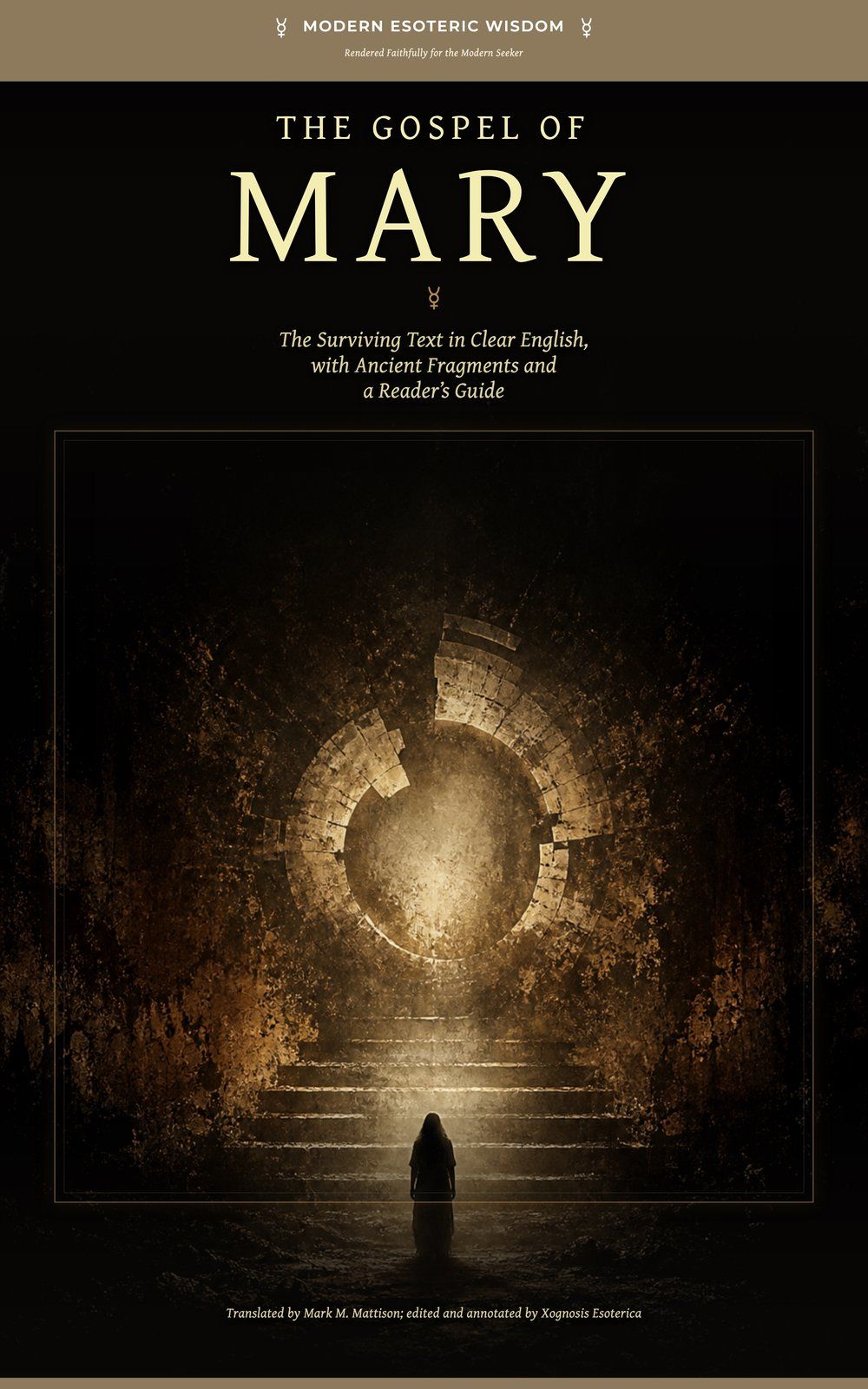
If you want to go deeper, our edition of The Gospel of Mary presents the text with the context these readings require, and Gnosticism Explained traces how polemic became the standard history.
Read the book
Related Articles
Continue through articles sharing this topic.
Esoteric literature has a way of swallowing beginners whole. You pick up one book about alchemy, and within a week you have six tabs open about Renaissance…
7 min read
In January 1896 the German scholar Carl Reinhardt bought a Coptic papyrus codex in Cairo.
7 min read
Every few decades, someone translates the esoteric classics again. New Enoches appear. New Pistis Sophias.
6 min read
Pick a shelf of spiritual books at random and you will find, somewhere in the first twenty pages, the same accusation: you are not actually awake.
7 min read
Related Books
Catalog volumes sharing this article’s lead tag.