 Xognosis EsotericaArcane Publishing Studio
Journal
Read researched articles and historical primers on alchemy, Gnosticism, ceremonial magic, grimoires, and the Western esoteric tradition. Every article connects back to a book.
Search by keyword, topic, or source book.
81 articles
Explore Topics
The Archive
New research, historical primers, and reading guides from across the catalog.

Ask most people who Jabir ibn Hayyan was and you will get a biography with the confidence of an encyclopedia entry: born at Tus in 721, son of a druggist,…
From Summa Perfectionis

Somewhere in Europe, probably in Italy, in the first decade of the fourteenth century, an alchemist sat down and wrote one of the most detailed laboratory…
From Summa Perfectionis
A book with no sentences is a bold wager. In 1677, at La Rochelle on the French Atlantic coast, the publisher Pierre Savouret printed a slim volume of…

The Mutus Liber arrived in 1677 as a book with almost no words in it. Fifteen engraved plates, published in La Rochelle by Pierre Savouret, credited to an…
The Mutus Liber, the "silent book" of alchemy, has no text to argue with. A sequence of engraved plates, a title page, and little else: no preface, no…
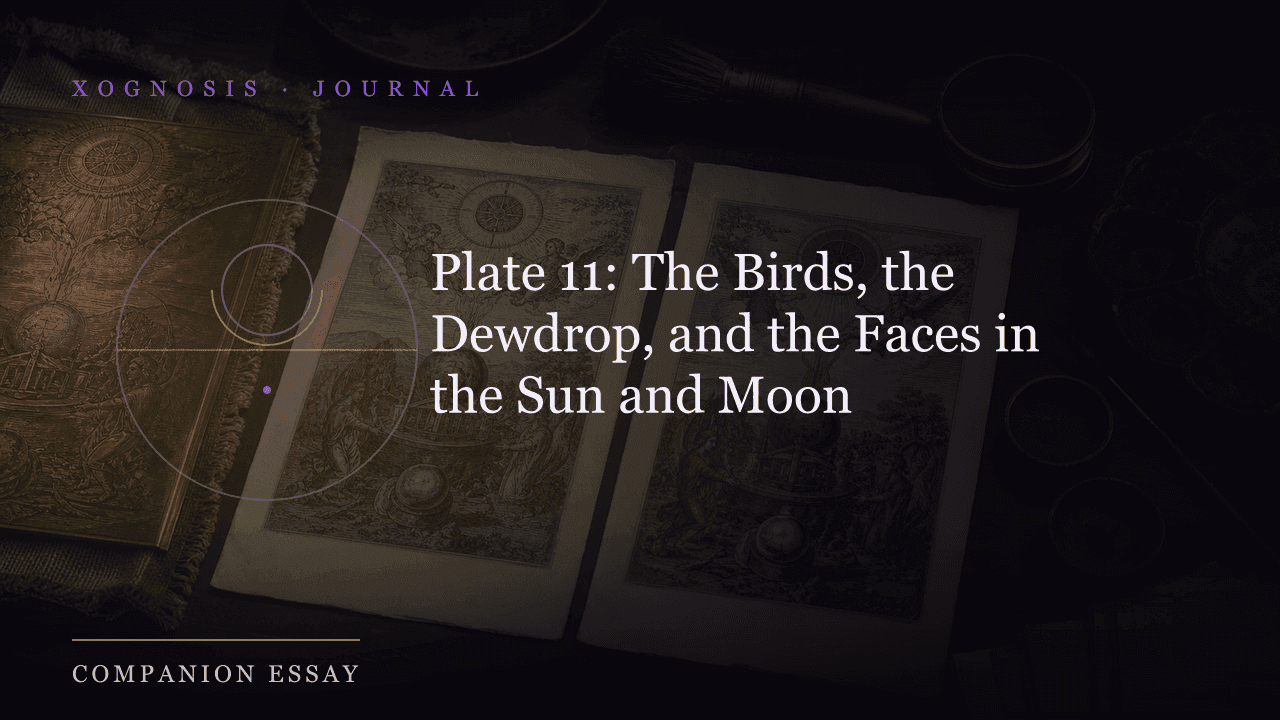
Of the fifteen plates in the Mutus Liber, the eleventh is the one where the whole doctrine squeezes itself into a single drop of water.
In 1677 a small book left a press in the Huguenot port of La Rochelle and said almost nothing.
Open an old alchemical text expecting dragons, celestial spheres, and hermetic thunder, and you will often find yourself instead in a house.
Open a page of John Dee's Monas Hieroglyphica at random and you see a strange object: a single compound sign, part astronomical, part alchemical, drawn once…
From Monas Hieroglyphica

There is a shelfmark in Glasgow that every serious student of John Dee eventually learns: Sp. Coll. Hunterian R.6. It holds what the scholar A.
From Monas Hieroglyphica
In the spring of 1576, a forty-eight-year-old mathematician named John Dee spent his days on board a cluster of ships tied up on the Thames, teaching…
In thirteen days of January 1564, John Dee wrote one of the strangest books in the history of science.
From Monas Hieroglyphica